
Did you know over 70% of Indian women want fabric that breathes well? They look for this in ethnic outfits for everyday wear. This shows a big challenge for shoppers in the world of traditional clothes.
Choosing the right material is key for all-day comfort. It matters a lot when you’re at work or doing chores. The fabric you pick affects how you feel at the end of the day.
Many people face a constant dilemma between cotton and rayon kurtis. Both have special benefits, but they work differently in different weather and activities.
Knowing these small differences helps you make a smart choice. This guide will show you the good points of each fabric. It will help you pick the best piece for your closet.
Key Takeaways
- Natural fibers are best for hot and humid weather because they breathe well.
- Synthetic blends give a smooth look and don’t wrinkle much.
- The fabric you choose greatly affects your comfort all day.
- Your style often decides the best fabric for you.
- Both options meet different needs in a modern ethnic wardrobe.
Understanding the Basics of Cotton and Rayon Fabrics
When we compare kurti fabrics, we must know the difference between natural and semi-synthetic materials. How a fabric is made affects its feel, breathability, and how it holds up every day.
“Quality in a garment is not just about the design, but the very essence of the fiber that touches the skin,” says a top textile expert. Knowing these basics helps us choose fabrics that feel right.
The Natural Origins of Cotton
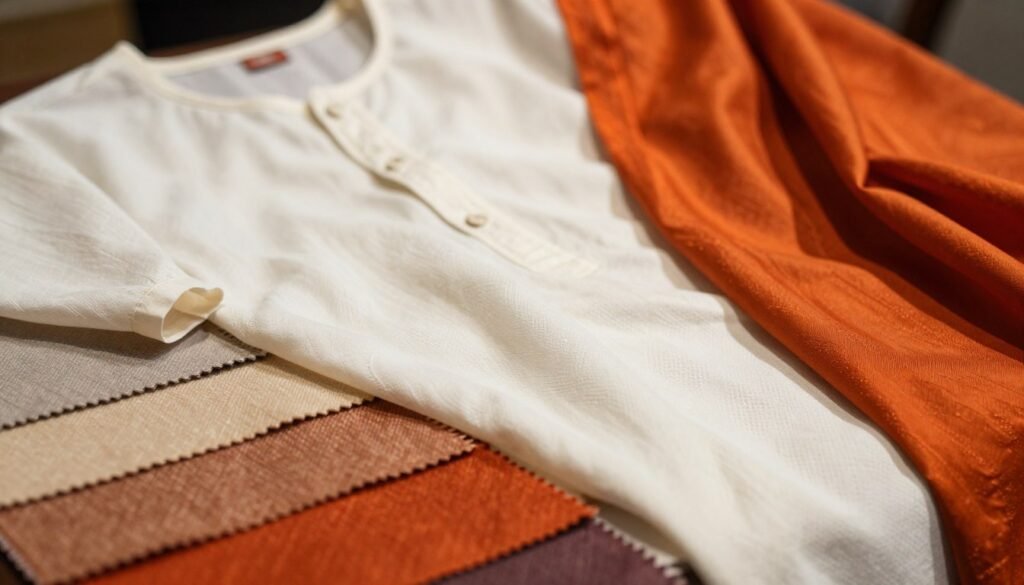
Cotton comes from the cotton plant’s fluffy bolls. It’s been a key part of Indian textiles for ages because it’s comfy and reliable.
Being from plants, cotton is a top pick for those who want to breathe. It’s a classic in every closet, getting softer with each wash.
The Semi-Synthetic Nature of Rayon
Rayon, on the other hand, is made from wood pulp or plant leftovers. It’s a semi-synthetic fiber that’s processed to feel like silk or cotton.
This special making process gives rayon a unique, flowing feel. Knowing this kurti fabric comparison helps us see why rayon looks and feels different from natural fibers.
A Detailed Comparison of Cotton vs Rayon Kurti Characteristics
When you look at a cotton vs rayon kurti, the fabric’s feel is key. Each fabric feels different on your skin and with the air around you. This affects how you feel all day.
Doing a deep kurti fabric comparison helps pick the right one for you. Do you like a crisp look or a soft feel? Knowing the differences is important.
Breathability and Moisture Management
Cotton lets air move freely against your skin. It’s great for hot, humid places because it keeps you cool. It also pulls moisture away from your body.
Rayon also absorbs moisture but holds it longer than cotton. This can feel heavy in the heat. Yet, it’s still loved for feeling cool at first touch.
Texture and Draping Quality
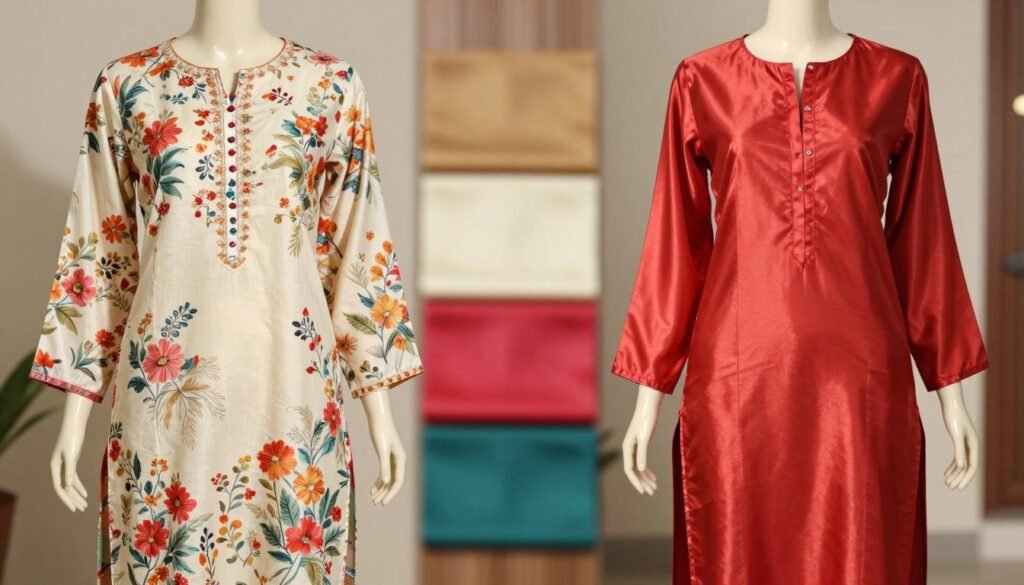
The look of your outfit depends on the fabric’s fall. Cotton is crisp and structured. It keeps its shape well and looks professional.
Rayon, on the other hand, drapes like silk. It moves smoothly and looks elegant. It’s great for soft, feminine looks.
To wrap up the kurti fabric comparison, here’s what you need to know:
- Cotton: It’s airy, keeps its shape, and lasts long.
- Rayon: It drapes beautifully, feels soft, and fits loosely.
- Performance: Cotton is best in hot weather. Rayon is for stylish, flowing looks.
Choosing between a cotton vs rayon kurti depends on your day. Cotton is good for work because it’s breathable. Rayon is perfect for parties because of its elegant drape.
Comfort Levels for Indian Climate Conditions
Knowing how fabrics handle India’s heat and humidity is key. The weather varies a lot, so we need fabrics that adjust. The right choice keeps you comfy all year.
Performance During Humid Summer Months
In the summer, staying cool and dry is the main goal. Cotton is the superior choice because it lets air through. It also takes moisture from your skin, keeping you cool.
Cotton’s pores help sweat evaporate fast. This keeps you feeling crisp and fresh. For hot areas, choose high-quality cotton for comfort.
Layering Potential for Winter and Monsoon
Rayon is great for cooler months. It’s a bit heavier and smoother, perfect for layering. It keeps you warm on rainy days without being too thick.
Rayon kurtis can be worn with a light jacket or shawl in cold weather. It looks good under other clothes, making you look polished. This makes rayon great for changing weather.
Your kurti material guide should match your local weather. Use cotton for summer and rayon for cooler or wet times. This way, you stay comfy all year.
Durability and Longevity of Kurti Materials
Choosing the right fabric is key to a lasting wardrobe. A good kurti material guide helps pick clothes that last long. Knowing how fabrics handle daily wear is crucial.
Resistance to Wear and Tear
Cotton is strong and lasts through many washes. Its cotton kurti advantages include not getting thin or torn easily. Natural fibers keep their shape well, great for daily wear.
Rayon, though soft, needs more care. It can stretch or fray when wet. Cotton is better for everyday use.
“The longevity of a garment is not just about the quality of the weave, but how the fiber interacts with the environment and the frequency of care it receives.”
Color Retention and Fading Issues
Keeping colors bright is important. Cotton holds dyes well but may fade a bit. This fading can make the fabric look vintage and nice.
Rayon, though, can lose its color faster. Harsh cleaners or too much sun can cause this. Here’s a table to show the main differences.
| Feature | Cotton | Rayon |
|---|---|---|
| Fiber Strength | High | Moderate |
| Shape Retention | Excellent | Variable |
| Color Fastness | Good | Fair |
| Daily Wear Suitability | High | Moderate |
Maintenance and Care Requirements
Do you like the feel of cotton or rayon? Knowing how to wash them is key. This keeps your clothes looking good for a long time. By following simple steps, your clothes stay bright and comfy.
Washing and Drying Best Practices for Cotton
Cotton is strong and easy to care for. Most cotton clothes can be washed in a machine without losing their look or color.
Use a mild soap and cold water. Air drying in the shade is best to avoid sun damage. Ironing cotton is easy, making your clothes look neat and sharp.
Handling Delicate Rayon Fibers
Rayon needs gentle care to keep its soft feel. One big rayon kurti benefit is its silky texture. But, it must be handled carefully to avoid damage.
Hand washing in cool water is safest. If machine washing, use the gentle cycle and a mesh bag. Don’t wring the fabric. Lay it flat to dry on a clean towel.
| Feature | Cotton Care | Rayon Care |
|---|---|---|
| Washing Method | Machine Wash | Hand Wash Preferred |
| Drying Process | Tumble or Air Dry | Flat Air Dry |
| Ironing Needs | High Heat | Low Heat/Steam |
| Durability | High | Moderate |
Styling Versatility for Everyday Occasions
Going to work or a brunch? Your kurti’s fabric matters. It shows your style. Knowing the kurti fabric difference helps you mix work and play clothes.
Professional Office Wear Considerations
At work, you want to look sharp. Cotton is best because it keeps its shape. It looks crisp and stays wrinkle-free all day.
“Style is a way to say who you are without having to speak.” — Rachel Zoe
For work, wear a cotton kurti with straight pants or leggings. It looks clean and simple. Cotton also doesn’t glare under bright lights, so you look good all day.
Casual Outings and Social Gatherings
Weekends are for being comfy. Rayon kurtis are soft and flowy. They’re great for brunch or shopping.
Rayon catches light, making you look elegant. Add jewelry or a scarf for a party. Knowing the kurti fabric difference helps you choose the right fabric for any event.
| Occasion | Recommended Fabric | Key Benefit |
|---|---|---|
| Office Meetings | Cotton | Structured Look |
| Casual Brunch | Rayon | Soft Drape |
| Evening Socials | Rayon | Elegant Flow |
Having both cotton and rayon kurtis is key. Rayon is perfect for fun times. Keep both in your closet for any day.
Cost Analysis and Market Availability
When you buy ethnic wear, the price shows the kurti fabric difference. Knowing this helps you choose wisely. It fits your budget and lifestyle.
Budget-Friendly Options for Daily Use
The Indian market has many choices for everyday clothes. You can find stylish outfits at different prices. Cotton is the best kurti fabric for those who want to save money.
Rayon is also popular for its low price. It’s great for trendy designs without spending a lot. Both fabrics are common in stores, making quality clothes easy to find.
- Cotton: It’s everywhere, from cheap to expensive stores.
- Rayon: It’s priced well, perfect for fast-fashion lovers.
- Market Reach: You can find both in big online stores and shops.
Value for Money Over Time
The first price is key, but the long-term value matters too. Cotton lasts long and keeps its look after many washes. This makes it cheaper over time.
Rayon needs more care to stay nice. This affects how long it lasts. Picking the right fabric means thinking about both the first cost and how long it lasts.
| Feature | Cotton | Rayon |
|---|---|---|
| Initial Cost | Variable | Low to Moderate |
| Durability | High | Moderate |
| Longevity | Excellent | Fair |
Buying good fabrics means your clothes will last and feel great. By looking at the kurti fabric difference, you can pick the best kurti fabric for you.
Environmental Impact and Sustainability
Choosing the best kurti fabric for daily wear is now about being green. People want to know how their clothes affect the planet. They look at where and how the fabric is made.
Biodegradability of Natural Cotton
Cotton is a top pick for those who care about the earth. It comes from cotton plants and is fully biodegradable. Cotton clothes can easily break down without harming the soil.
“The true cost of fashion is not just in the price tag, but in the footprint we leave behind on the earth.”
Choosing organic or sustainable cotton is even better. It means less use of harmful chemicals and water.
Chemical Processes in Rayon Production
Rayon is soft but its making is complex. It’s made from wood pulp or bamboo cellulose through chemicals. Lots of chemicals are needed to turn it into a liquid.
These chemicals can pollute water and harm workers. But, new ways to make rayon are helping. Still, it’s important for those who care about the planet to know this.
Choosing the Right Fabric for Your Body Type
Knowing how fabrics and body types go together can change your wardrobe. A smart kurti material comparison shows you which fabrics make you look good. They also make sure you’re comfy all day.
Why Cotton Suits Structured Silhouettes
Cotton is great for a neat, fitted look. It’s stiff, so it keeps its shape well. This makes it perfect for structured silhouettes like A-line kurtis.
This fabric keeps you looking sharp all day. It’s perfect for those who like a bit of shape. Cotton garments are reliable and look professional.
“The right fabric acts as a canvas for your personal style, defining how a garment interacts with your silhouette.”
How Rayon Enhances Flowy and Flattering Cuts
Rayon is best for a soft, feminine look. It drapes well, following your body’s shape. This makes it elegant and comfy.
This cotton vs rayon clothing fabric choice is key for different events. Rayon is great for:
- Anarkali cuts that need a soft, flowing look.
- High-low hemlines for smooth movement.
- Loose, breezy styles for comfort and style.
Choosing rayon for flowy designs means your outfit moves with you. It creates a flattering silhouette that’s light and easy. It’s perfect for social events or casual days where you want to be comfy.
Conclusion
Choosing between cotton and rayon depends on what you need. Cotton is tough and breathable for long days. It’s great for those who want clothes that last and are easy to care for.
Rayon is soft and elegant. It’s perfect for special events where you want to look good and feel comfortable. Knowing the differences helps you shop better.
Having both cotton and rayon in your closet is smart. Brands like Fabindia and Biba offer these fabrics for different weather in India. This way, you’re ready for anything while staying comfortable.
Choosing the right fabric makes your clothes more useful and enjoyable. Think about your life before picking a kurti. This way, every piece of clothing meets your needs all year round.